What customers say
Solar Today and TomorrowSolar design and installation · Durango, CO
Serving Durango and nearby towns
Private website concept: a proposed solar service for mountain homes, not an operating company.
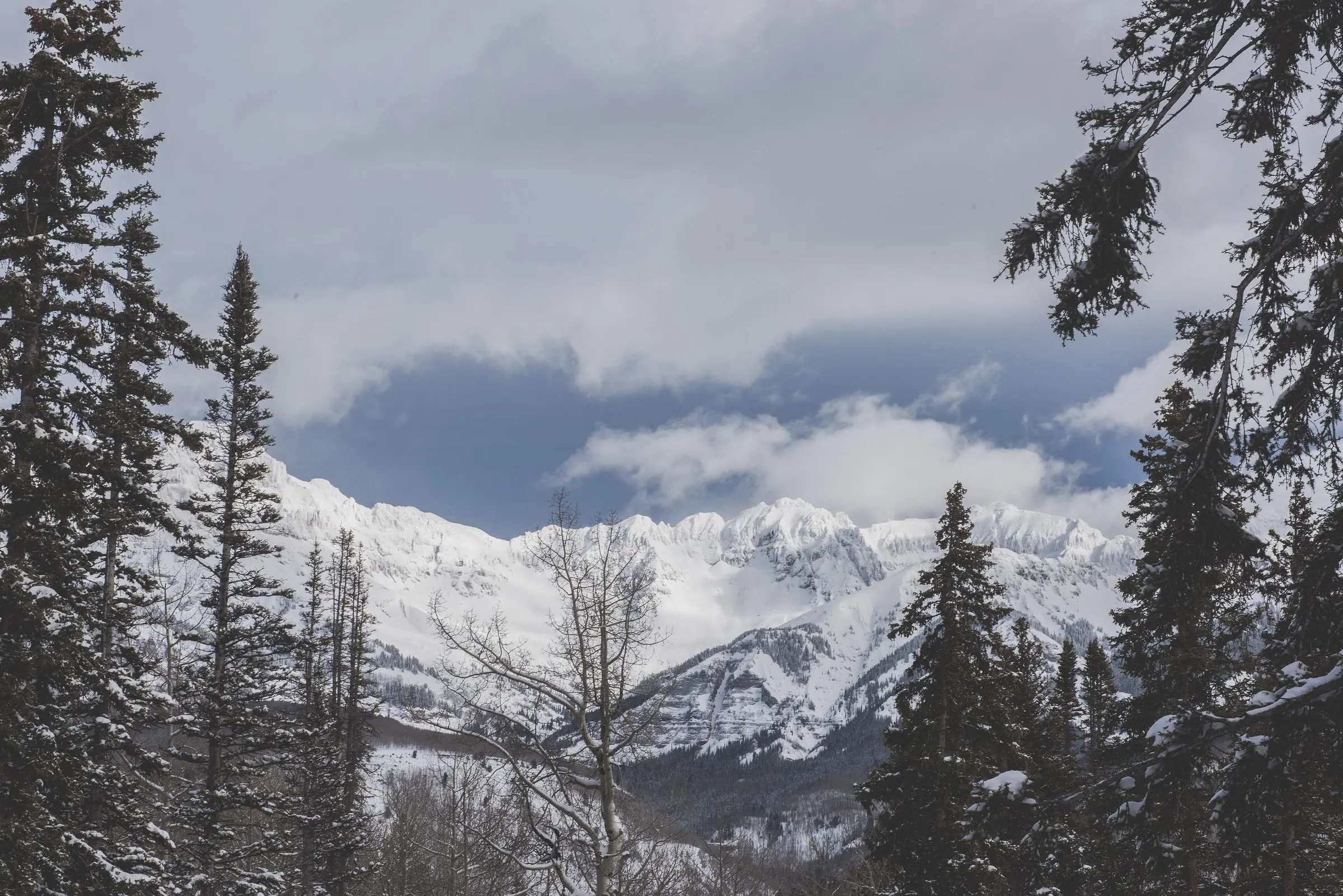
Durango, Colorado
Solar Today and Tomorrow is a solar installer for Durango, CO homes served by La Plata Electric Association. It would size phase 1 to your budget and the co-op's rules, with wiring, roof space and snow design built in for phase 2. A quote would price phase 1 and map phase 2 in writing.
Get your free quoteCheck your phase room
Durango, Colorado
Solar Today and Tomorrow works the mountain parcels around Durango, where snow load, altitude and the co-op's rules shape a design more than panel count does. We build phase one to your budget and wire for phase two.
What customers say
Serving Durango and nearby towns
What we do
Call or visit
| Phone | (970) 749-0658Call to book an assessment. |
|---|---|
| Office | 34106 US-550, Durango, CO 81301Parking on site. |
| Estimates | Free, in writingDesign and price as separate documents. |
Why homeowners pick us
Our story
Installing across Durango, Bayfield, Ignacio and the Animas Valley.
Where we work
How much room would your co-op leave for a second phase? Pick the co-op on your bill, enter your last 12 months of use and a phase 1 size. The roof plate fills phase 1 and draws the room left for phase 2. Your numbers stay on this device.
Illustrative calculation. The default production factor is Colorado's state figure from EcoGen's data (Denver reference location). Replace it with a PVWatts estimate for your roof. The co-op's engineers make the actual decision.
One tile = 0.4 kW of panels. Empty tiles are not a roof measurement.
Phase 1Room for phase 2Over the limit
About 2.1 kW of room for phase 2
If you can't or shouldn't buy a whole solar system this year, decide now what the second half will need. The first system sets its terms.
Durango's power comes from La Plata Electric Association (LPEA), a member-owned co-op, not a city utility. LPEA decides how big your system may be and whether it may send power to the grid. Two of its rules shape a phased build:
The cheapest first system can also leave no room to grow. Conduit (the pipe that carries the wiring) too small for more wire, no free breaker in the main panel, an inverter with no spare input, rails that stop where phase 1 stops: each of these turns phase 2 into rework.
Phasing isn't free, though. Phase 2 goes back through LPEA's application with another $150 fee, another city permit at $125 plus use tax, another State electrical permit and inspection, and another trip up the ladder. If your address is in an exporting zone, your budget covers the full size and LPEA's cap allows it, one system now is usually the simpler buy. Phasing earns its extra paperwork when money, the feeder or a load you haven't bought yet holds the full size back.
Either way, ask any installer for the five documents below before you compare prices.
This page claims no license, reviews, crews, warranties, prices or years in business. Ask any installer, including this one, to show those in writing.
How we work. After an assessment, you would receive:
The quote would also write down the phase 2 trigger. We recognize three: your budget, within the room on the cap sheet; your feeder reopening to exports; or a new load over 2 kW, such as an EV charger or heat pump, which LPEA considers with proof of purchase. We wouldn't forecast next year's use. The trigger is the receipt.
| Choice | Options | What decides it |
|---|---|---|
| Phase 1 size | Budget-sized, cap-sized, or sized to daytime use | Your budget, LPEA's 150% cap, and whether your feeder exports |
| Inverter route | Module-level electronics (a small unit on each panel), or a string inverter with a spare input | How phase 2 will connect: panel by panel, or as a second string |
| Mounting | Roof, or a ground mount where snow or the roof argues for one | Snow landing zones, roof age, and which roof planes are left for phase 2 |
| Battery | None now, or a later phase on its own quote | LPEA's evening Peak Power Charge, not panel size |
Optional, priced separately: the phase 2 installation, a battery, a ground mount, roof work and a main panel upgrade.
The assessment would take about two hours on site (illustrative example). Most of the useful answers come from what you bring.
Roof planes come first, judged on winter sun as well as summer. DOE's general guidance is that south-facing roofs pitched 15 to 40 degrees perform best. In December the sun sits low, so a ridge, a neighbor's roof or a spruce that casts no shade in June can shade a plane through the short winter day. Phase 1 shouldn't take the best plane if that leaves phase 2 only poor ones.
Snow is the second check. It tends to slide off panels in sheets, so the snow sheet would mark where it lands: doors, decks, walkways, vents, the gas and electric meters. Where a landing zone matters, the quote adds snow guards, brackets that hold snow on the roof so it melts or drops gradually.
The racking has to match your address's snow load. The City of Durango's building FAQs say designers take the ground snow load from the code tables or from the La Plata County GIS map, and use a 104 mph basic wind speed for typical homes. Because the figure is set per address, the snow sheet would show your number, where it came from and what the racking is rated for.
Then the cold. Panels wired in series form a "string", and the string's voltage rises as the temperature drops. On the coldest expected morning it must still stay under the inverter's limit; the National Electrical Code (section 690.7) sets how that is worked out. Mountain winters make this a real design input, so ask which low temperature the designer used.
Finally, electrical readiness: the main panel and busbar rating, free breaker space, conduit sized for phase 2's wiring, and the inverter route from the table above. A string inverter's spare input is an unused connection a later string can plug into; module-level electronics let panels be added one at a time.
LPEA will not approve a system that would generate more than 150% of your gross use over the previous 12 months. It needs at least four months of history, or it uses a standardized calculation. Other major use greater than 2 kW "will be considered with proof of purchase". Every application gets an engineering review, and the member pays for any line upgrades (LPEA's 2026 Rates and Regulations).
Net metering credits the power you send to the grid against the power you take. Net-metered members still pay base, demand and minimum charges. Excess credit is settled once a year, in the April bill, at LPEA's avoided wholesale energy cost from the previous year, not your retail rate. LPEA's own warning: "Systems that are oversized have longer payback periods."
LPEA's 2026 General Service rate is a $25.30 monthly base charge, $0.1156 per kWh, and a Peak Power Charge of $5.73 per kW, set by your single highest hourly demand between 4 and 9 p.m. each month. Panels produce little late in that window and nothing after sunset, so a bigger array doesn't shrink that charge.
LPEA sorts its feeders, the lines that serve a neighborhood, into three zones:
| Zone | Exports allowed? | Net metering | Effect on phase 2 |
|---|---|---|---|
| Zone 1 | Yes | Yes | Limited mainly by the 150% cap and your hardware |
| Zone 2 | Yes, for now | Yes | Pending applications may turn it into Zone 3; recheck before each phase |
| Zone 3 | No, self-supply only | Does not apply | Size phase 1 to daytime use; phase 2 may wait for the feeder |
LPEA's advice for Zone 3 reads like the case for a phased build: "Consider right sizing your system to daytime needs for now, leaving room for future expansion." A zone can also change between your application and LPEA's review. On November 18, 2026, LPEA's map showed its Zone 2 and Zone 3 feeders clustered around Durango's north and west sides, Florida Mesa and Hesperus, with downtown Durango in Zone 1. Check your own address before you request a quote.
On a closed feeder you can join LPEA's Solar Export Queue. It is free, first come first served, and export capacity is reviewed in June and November. LPEA warns there is no guarantee export opens and that a system may have to stay non-exporting indefinitely. Plan phase 1 so it still makes sense if the feeder never reopens.
Illustrative calculation. A Durango household used 7,200 kWh in the last 12 months (SmartHub export).
- LPEA's cap: 7,200 × 150% = 10,800 kWh a year.
- At Colorado's state production factor of 1,656 kWh per kW per year: 10,800 ÷ 1,656 = about 6.52 kW. (State figure from EcoGen's data, Denver reference location; ask for a site-specific PVWatts estimate for your roof.)
- Phase 1: 4.4 kW, making about 4.4 × 1,656 = 7,286 kWh a year, close to today's use.
- Room for phase 2: 6.52 − 4.4 = about 2.1 kW under today's history.
- Written trigger: budget, or a new load over 2 kW accepted with proof of purchase, which raises the room.
A production factor is the yearly energy one kW of panels makes at a given place. Your roof's real figure depends on pitch, orientation, winter shade and snow cover. It changes the kW cap; the method stays the same. LPEA's engineers make the actual decision, so use the cap sheet to check the installer's numbers. It promises nothing.
Now put the same home in Zone 3. On a self-supply feeder net metering does not apply, so midday power the home can't use has nowhere to go and earns nothing. Phase 1 would be sized to daytime use and set not to export, and the household would join the Export Queue. Phase 2's trigger becomes the feeder reopening at a June or November review. Meanwhile the readiness work waits in the wall and on the roof.
One headline price can't show whether you're buying a plain system or one built to grow. Ask for the lines, then check the solar-only part.
| Line (illustrative example) | Amount |
|---|---|
| Solar system, 4.4 kW: panels, inverter, racking, installation | $13,300 |
| Phase 2 readiness: upsized conduit, extra rail, breaker space | $700 |
| Snow guards over the entry and deck | $500 |
| Phase 1 total | $14,500 |
Illustrative calculation. Price per watt ($/W) is the price divided by the rated watts. All in: $14,500 ÷ 4,400 W = $3.30/W. Without the $1,200 of readiness and snow items: $13,300 ÷ 4,400 W = $3.02/W.
State benchmark: EcoGen's Colorado solar cost benchmark is $3.02/W (September 2026 Edition, prices as of September 25, 2026; cash, before incentives, solar only).
The all-in $3.30/W sits about 9% above the benchmark, but that doesn't make the quote 9% overpriced. It carries work a plain system leaves out. Ask what is in the extra and whether you need each item.
EcoGen's index is a modeled price per watt for a representative residential system before incentives, not a quote for your roof. EcoGen also warns against comparing it with a battery-inclusive or financed quote without accounting for the difference. So take out any battery, roof work or panel upgrade first, then divide.
Several lines can push a Durango quote away from the benchmark: roof work on an aging roof, a main panel upgrade when there is no breaker space, a ground mount, snow guards, readiness work, and the permit and LPEA fees below.
One line has gone. The IRS says the federal residential clean energy credit is not available for property placed in service after December 31, 2025. Decide on the price you will actually pay.
A Durango rooftop system needs two permits plus LPEA's approval, and sometimes a design review before any of them. Ask who files each one.
1. Design review, where it applies. The city's Solar Permit Checklist sends projects in a historic or special district (the East Third Avenue Historic District, for example), a Planned Development zone, a homeowners' association or a landmark site through an alterations certificate, design review or HOA approval first. On pitched roofs, panels follow the roof pitch, sit no higher than the building and no more than 12 inches off the roof. Colorado law (C.R.S. 38-30-168) limits how far an HOA can restrict solar and treats an application left unanswered for 60 days as approved.
2. The City of Durango solar permit. Every solar installation needs one from the Community Development Department's Building Division. A contractor holding a city business license applies through the city's OpenGov portal. Where plan review is required, the city asks applicants to allow at least 30 business days. Since April 1, 2026, the residential fee is $125 plus use tax, charged at 1.75% of the project valuation.
Illustrative calculation. On the $14,500 phase 1: $125 + (1.75% × $14,500 = $253.75) = $378.75.
Whether use tax should apply to solar equipment is unsettled, so ask for the fee and the tax as their own line. Durango has used the 2024 International Codes and the 2023 National Electrical Code since January 1, 2026, and Colorado's Wildfire Resiliency Code since April 1, 2026.
3. The State electrical permit. The city doesn't permit electrical work; the State does. Per the Colorado Division of Professions and Occupations, your contractor obtains it, and electrical work on your home by anyone other than you or a registered electrical contractor breaks state law. The State inspects, with the contractor or an adult homeowner present, and the approval is uploaded to the city.
Settle the order. The city's 2018 application form puts the solar permit before the LPEA net metering application. LPEA's current process puts its engineering review first. The city's checklist adds that its permit does not guarantee LPEA approval. Ask the installer to confirm the order with both offices, in writing.
Permission to operate (PTO) is LPEA's written OK to switch the system on. One national directory tells Durango shoppers that a town representative approves interconnection. Here the State inspects the wiring and LPEA decides.
LPEA's Ready to Apply page sets out six steps:
Don't switch on before step 5. Phase 2 starts again at step 1, with a new fee, permit and inspection, which is why the phase 2 estimate should list that paperwork from the start.
Ask for the monitoring account in your own name. Compare a full year of production with the quote's estimate, and if it falls short, find out why before you buy phase 2. A shortfall you haven't explained could repeat in the second half.
Warranties need to survive the second phase. The U.S. Treasury's consumer guide to buying solar suggests checking whether a loan would be paid off within the panel warranty, whether your homeowner's insurance covers the system, and whether financing files a UCC-1 (a public notice of a lender's claim on the equipment). Add one phased-build question: what happens to phase 1's manufacturer and workmanship warranties when phase 2 adds panels or an inverter? Get that answer in writing too.
Snow care belongs in the agreement as well: who clears the panels, whether the roof is safe to reach in winter, and who pays if a slide takes out a gutter.
A battery is the natural later phase on LPEA, because the Peak Power Charge rewards cutting evening demand, which panels can't do after sunset.
Illustrative calculation. A 6 kW peak between 4 and 9 p.m. costs 6 × $5.73 = $34.38 a month on LPEA's 2026 General Service rate.
A battery can trim that peak. That makes it a reasonable later phase and a poor reason to oversize panels. Keep it on its own quote.
Use these with any Durango-area quote, including one from this service. The quote checklist on this site follows the same order.
LPEA and phases
Price
Permits and power
Snow and cold
If you hear that snow "will melt first" off the panels, that is reassurance, not a design. Ask where it lands.
The installer
Should I add a battery now for LPEA's rebate? LPEA's battery rebate ends with 2026: the battery needs PTO in 2026 and a rebate application by January 21, 2027. It pays $1,000 for a 10 to 19.9 kWh battery scheduled to cut 4 to 9 p.m. demand, more for larger ones. For a project not yet started in late November, permits and PTO leave little time. Judge a battery on the Peak Power Charge instead.
Is solar worth it in Zone 3? It can be, if phase 1 matches what you use while the sun is up, which is what LPEA itself suggests.
Is there a federal solar tax credit in 2026? Not for homeowners. The IRS credit does not cover systems placed in service after December 31, 2025.
Would you work outside Durango? We look at nearby towns, but that coverage covers these towns. The rules change with the address: Bayfield shares LPEA's rules, Mancos is on a different co-op with a different size rule, Mountain Village is on San Miguel Power Association with its own net metering limit, and Telluride adds historic review. Each town page builds its own cap sheet.
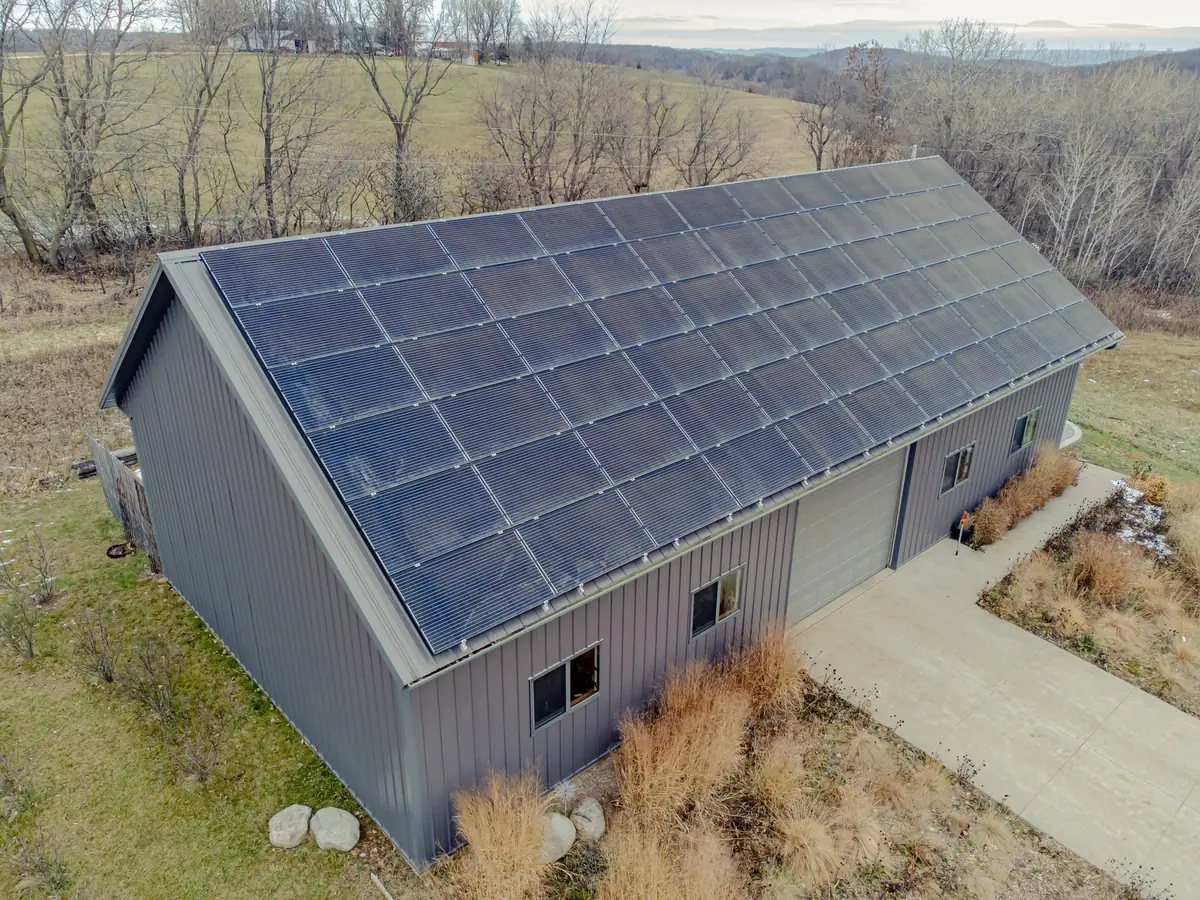
Three co-ops serve these towns, and each sets its own size limit, credit and paperwork. Each guide works through the rule that changes the plan there. Coverage of every town is proposed and unconfirmed.
Pick your town and what you want priced. The site turns your answers into a checklist to bring to any installer's quote visit, this proposed service included. It runs on this device: nothing is sent or stored.